Introduction
The creation of a fashion collection is a complex creative process in which not only aesthetic solutions but also profound cultural meanings are materialized. Contemporary design increasingly demonstrates a tendency toward intercultural dialogue, where elements of different traditions are organically combined to produce new artistic expressions [1, p. 352]. This article examines the possibilities of integrating South Korean aesthetics into an already developed youth capsule collection inspired by Karelian motifs. This is illustrated in Figure 1.
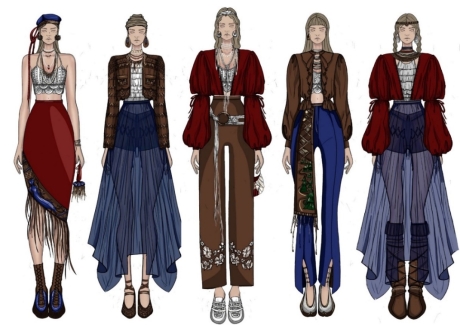
Fig. 1. Capsule Clothing Collection with Karelian Motifs
As a contemporary design concept, a capsule collection involves the creation of a limited line of interchangeable garments that together form a versatile wardrobe [2, p. 62]. The philosophy of the capsule wardrobe is grounded in conscious consumption and the efficient use of time and resources, principles that resonate remarkably well with East Asian ideals of moderation and mindfulness.
The decision to draw upon South Korean philosophy and aesthetics within this project is far from accidental. Despite geographical distance and cultural differences, Karelian and Korean traditions exhibit striking similarities in their attitudes toward nature, symbolism, and the profound semantic significance of visual elements [3, p. 161]. Both cultures regard nature not as an object to be conquered but as a source of wisdom and harmony, a perspective reflected in their ornamentation, color palettes, and compositional principles.
The purpose of this study is to provide both a theoretical justification and a practical demonstration of the possibilities for synthesizing South Korean philosophical aesthetics with the existing concept of a capsule collection based on Karelian motifs. Such an approach allows the collection to acquire a deeper conceptual dimension, in which every design element conveys not only visual appeal but also philosophical meaning.
- Foundations of Korean Aesthetic Philosophy
South Korean philosophy represents a unique synthesis of Confucianism, Buddhism, and Daoism [4, p. 286]. At the core of the Korean worldview lies the concept of Pungnyu (Pungnyu-seong and Pungnyu-sin), which describes the fundamental duality of existence [5, p. 30]. In Korean thought, Pungnyu combines playfulness and artistic expression while placing metaphysical and spiritual principles at its center. Unlike the traditions of China and Japan, Korean philosophy places particular emphasis on inner, ideological, and spiritual dimensions. The ideal of Korean aesthetics is the unity of the divine and the human.
This ideal is based on two interrelated concepts:
— Pungnyu-seong refers to the spiritual quality inherent in all beings and in nature itself, generating spirituality as an intrinsic property of the world.
— Pungnyu-sin denotes the human aspiration to experience, appreciate, and express this «Pungnyu quality».
In other words, Pungnyu-sin is the desire to perceive Pungnyu-seong and externalize it through artistic creation. It is the human will to manifest the spiritual essence of the world. For the aesthetic realization of Pungnyu-sin, Korean philosophy distinguishes three fundamental categories that together form the basis of Korean aesthetics:
— Heung ( 흥 ) — inspiration, enthusiasm, joyful excitement, and emotional uplift. It is a state in which sorrow recedes and gives way to joy, imagination, and creative energy. Koreans are often described as naturally inclined toward Heung , expressing it through singing, dancing, and communal celebration [6, p. 89].
— Han ( 한 ) — sorrow, grief, accumulated pain, resentment, and emotional endurance. Unlike Heung, which embodies brightness and optimism, Han reflects profound melancholy and the emotional burden of suffering. Nevertheless, it remains an essential component of the Korean emotional experience.
— Musim ( 무심 ) — literally «without mind», referring to a state free from selfish desires and attachments. It represents serenity, tranquility, and liberation from emotional turmoil, transcending both joy and sorrow [7, p. 167].
Although these three states differ significantly, they coexist within a dynamic relationship. Their interaction forms the philosophical system of Pungnyu, which underlies the East Asian understanding of beauty. Through this interaction, a cyclical process emerges: a person experiences intense inspiration (Heung), encounters hardship and suffering that lead to Han, and ultimately transcends these emotions to attain the peaceful detachment of Musim. This continuous transformation constitutes one of the fundamental principles of East Asian aesthetics.
- Parallels Between Karelian and Korean Traditions
An analysis of these philosophical concepts reveals profound similarities between Karelian and Korean cultural traditions in their approaches to nature, symbolism, and aesthetics. Both cultures developed in close interaction with their natural environments, shaping their worldviews, artistic practices, and everyday lives.
Karelian culture evolved amid forests, lakes, and rocky landscapes, fostering deep reverence for nature that is reflected in epic works such as the «Kalevala» [8, p. 11]. In this national epic, nature is not merely a backdrop but an active participant endowed with magical powers and wisdom. Similarly, Korean tradition –particularly in its Buddhist and Daoist dimensions regards nature as a source of spiritual knowledge and harmony.
Karelian ornamentation features geometric patterns and stylized depictions of plants, animals, and natural forces. These motifs serve not merely as decoration but as symbolic elements rooted in mythology, ritual, and cosmological beliefs [9, p. 23]. For example, tree imagery represents the World Tree connecting different realms of existence, while water motifs reflect the sacred status of lakes and rivers [3, p. 176].
Korean aesthetics are likewise deeply symbolic. Traditional Korean art frequently depicts the «Four Gentlemen» plants plum blossom, orchid, chrysanthemum, and bamboo each representing distinct moral virtues. Decorative motifs found on the traditional hanbok often include clouds, cranes, dragons, and flowers that symbolize longevity, happiness, prosperity, and good fortune [10, p. 112].
- Color Symbolism
Color symbolism occupies an important place in both traditions. Karelian culture favors subdued, natural tones inspired by the northern landscape, including shades of gray, brown, and green. Red traditionally functions as a protective color symbolizing vitality and defense against evil spirits, while white is associated with purity and sacredness.
In Korean tradition, colors possess profound cosmological significance through their association with the theory of the Five Elements ( Ohaeng ): wood, fire, earth, metal, and water [11, p. 67]. Each element corresponds to a specific color: green — wood, renewal, and growth; red — fire, passion, prosperity, and positive energy; yellow — earth, balance, stability and harmony; white — metal, purity, honesty, and integrity; black — water, wisdom, depth, and perseverance.
These colors are employed not arbitrarily but according to philosophical principles intended to maintain harmony and balance.
- Principles of Composition
Both Karelian and Korean artistic traditions favor asymmetry and naturalness over strict geometric regularity. In Korean aesthetics, this preference is expressed through the concept of «natural beauty» or the «beauty of imperfection», which resembles but remains distinct from the Japanese notion of «wabi-sabi». Karelian folk aesthetics likewise value organic forms and authenticity, particularly in traditional crafts such as wood carving, embroidery, and weaving.
-
Integrating Korean Philosophy into the Capsule Collection
- A Three-Part Structure Based on Heung, Han, and Musim
The proposed capsule collection, consisting of ten garments, may be conceptually divided into three groups corresponding to the three principal categories of Korean aesthetics.
Heung Group (Inspiration, Joy, Vitality). This category would include three or four garments expressing energy, movement, and celebration. The designs could incorporate brighter accents from the Karelian palette: reds, oranges, and greens reminiscent of the Northern Lights and sunsets over northern lakes. Silhouettes would be freer and more dynamic, featuring asymmetrical elements, while ornamentation could depict birds, the sun, and floral motifs symbolizing awakening, growth, and renewal.
Han Group (Sorrow, Reflection, Emotional Depth). Another three or four garments would embody restraint, introspection, and quiet contemplation. Their color palette would emphasize darker and more muted tones such as gray, deep blue, and brown, reflecting the severity of northern landscapes, the depths of Karelian lakes, and the shadows of coniferous forests. Silhouettes would be minimalist and structured, while ornamentation could feature water, stones, and winter trees as symbols of endurance, resilience, and inner strength.
Musim Group (Serenity, Detachment, Harmony). The remaining two or three garments would express tranquility, peace, and unity with nature. Their palette would consist of subtle combinations of beige, light gray, soft green, white, and pale blue. The silhouettes would be simple, comfortable, and natural, with minimal decoration or none at all. Emphasis would instead be placed on fabric texture, material quality, and precision of tailoring.
- Cyclical Movement and Transformation
An important aspect of Korean philosophy is the idea of cyclical movement the continuous transition from Heung to Han, from Han to Musim, and ultimately back to the beginning [5, p. 56]. This concept can be embodied in the capsule collection through the transformability of its garments, allowing a single piece to convey different emotional states depending on how it is styled, combined with other items, or accessorized. For example, a minimalist dress belonging to the Musim group may be paired with a brightly colored belt or an embroidered collar, shifting its expressive character toward Heung. Likewise, a structured jacket from the Han group can be combined with a lightweight blouse to create a more uplifting and energetic appearance.
- The Symbolism of Ornament Through the Lens of Pungnyu
The Karelian ornaments incorporated into the collection may be reinterpreted through the philosophical framework of Pungnyu. In this context, each decorative motif functions not merely as an ethnic identifier but as a carrier of deeper philosophical meaning.
Tree motifs such as pine, spruce, and birch may be understood as expressions of Pungnyu-seong, the spiritual essence inherent in all living things [3, p. 165]. The tree symbolizes the connection between heaven and earth, past and future, roots and branches.
Water motifs including waves, fish, and waterfowl can be associated with cyclical movement and the fluidity of emotional states, ranging from the calm surface of a lake (Musim) to the rushing current of a river (Heung) and the mysterious depths of dark waters (Han).
Geometric patterns, such as diamonds, crosses, and zigzags characteristic of Karelian embroidery and wood carving, may be interpreted as visual representations of the harmony of opposites, comparable to the balance embodied in the Korean concepts of yin and yang [12, p. 298].
- The Synthesis of Karelian and Korean Motifs
Water Imagery. Karelian motifs depicting waves or rippling water can be combined with Korean representations of lotus flowers or water lilies. In Karelian tradition, water is a sacred element associated with femininity, birth, and purification. In Korean culture, the lotus symbolizes purity and spiritual transcendence, rising unstained from muddy waters. Their combination creates a multilayered symbol of renewal, spiritual growth, and inner purity.
Tree Motifs. Stylized Karelian depictions of pine or spruce may be complemented by Korean images of bamboo or pine. In both cultures, evergreen plants represent resilience, longevity, and the capacity to preserve vitality under harsh conditions. Such compositions highlight both the similarities and distinctive interpretations of shared symbolic themes.
Bird Imagery. Traditional Karelian depictions of ducks, swans, and geese may be paired with Korean representations of cranes. In both traditions, birds symbolize the soul, freedom, and the connection between heaven and earth. While the crane signifies longevity and good fortune in Korean culture, the swan represents fidelity and beauty in Karelian symbolism. Their juxtaposition enriches the symbolic vocabulary of the collection.
Geometric Patterns. Traditional Karelian diamonds, crosses, and zigzags may be reinterpreted through the Korean cosmological system of trigrams and the Five Elements [12, p. 307].
For example, the diamond traditionally associated in Karelia with fertility and feminine principles may be related to the square symbolizing earth in Korean cosmology. Likewise, the Karelian cross, representing the four cardinal directions, may be connected with the Korean philosophical framework of the Five Elements, creating new layers of intercultural meaning.
- The Philosophy of Materials
Traditional Korean culture embraces the concept of mulgeon , which emphasizes respect for objects and recognizes their spiritual value [4, p. 286]. Every garment is viewed not as a disposable commodity but as the outcome of the labor of countless people and natural processes. Fabrics originate from plants nourished by sunlight and rain, are dyed using materials harvested during specific seasons, and are woven and sewn by human hands. Similarly, Karelian culture has long been characterized by careful stewardship of possessions. In the harsh northern climate, where resources were limited, garments were made to last for many years, repaired when damaged, altered when necessary, and often passed down through generations. This philosophy of durability should serve as a cornerstone of the contemporary collection.
Practical Implementation
The proposed design philosophy may be realized through:
— the use of high-quality natural materials that become more aesthetically appealing with age for example, linen acquiring greater softness and wool developing a refined luster;
— timeless silhouettes that remain relevant regardless of seasonal fashion trends;
— thoughtfully engineered construction with seam allowances that facilitate repair and alteration;
— detachable and replaceable components, such as buttons, ties, and decorative details, allowing garments to be refreshed and adapted over time.
Conclusion
The integration of South Korean philosophy into a youth capsule clothing collection inspired by Karelian motifs represents an innovative approach to contemporary fashion design. This synthesis is not a mechanical combination of elements from two distinct cultures but rather an organic interweaving of meanings, values, and visual solutions based on profound similarities in their worldviews.
Both Karelian and Korean cultural traditions evolved in close relationship with nature, fostering a distinctive perception of the natural world as a source of wisdom and inspiration. The rich symbolism characteristic of both cultures enables every design element to carry multiple layers of meaning, transforming clothing from a mere consumer product into a medium of cultural expression.
The Korean aesthetic framework of the three emotional states: Heung (inspiration), Han (sorrow), and Musim (serenity) provides a philosophical structure for organizing the collection, with each group of garments reflecting a particular emotional and spiritual condition. The cyclical transition between these states mirrors the principles of adaptability and multifunctionality that define the capsule wardrobe concept.
Materials, production techniques, color palettes, and silhouettes are all informed by a philosophy of mindfulness, respect for tradition and nature, and the pursuit of harmony. The use of natural fabrics, traditional dyeing and finishing methods, collaboration with local artisans, and the minimization of waste represent not merely adherence to the principles of sustainable fashion but the embodiment of deeply rooted cultural values.
The creation of such a collection requires not only design expertise but also extensive scholarly research, immersion in cultural contexts, and sensitivity to symbolic meanings. It constitutes a journey across cultures as well as an inward exploration of traditional wisdom.
The resulting collection is more than a set of aesthetically pleasing garments; it is a coherent artistic statement in which North and East, antiquity and modernity, functionality and spirituality coexist in harmonious unity. It is intended for thoughtful consumers who seek not only visual appeal and comfort but also deeper meaning, a connection to cultural heritage, and an opportunity to express their values and worldview through material objects.
In a contemporary world where globalization has often led to the erosion of cultural distinctions and the homogenization of aesthetics, projects of this nature acquire particular significance. They demonstrate that an alternative path is possible not the abandonment of tradition in the name of modernity, but its creative reinterpretation and integration into present-day design practice.
Within this framework, intercultural dialogue does not diminish the uniqueness of individual traditions. On the contrary, it highlights the universal values that unite different peoples.
Despite their differences, Karelian and Korean cultures reveal remarkable similarities in their perception of nature as both teacher and source of inspiration, in their use of symbolism to communicate complex philosophical ideas through visual means, and in their appreciation of simplicity and naturalness as fundamental aesthetic ideals. These shared characteristics make their synthesis not an artificial construct but an authentic convergence of kindred spiritual traditions.
References:
- Welters L., Lillethun A. Fashion History: A Global View. London: Bloomsbury Publishing, 2018. — 352 p.
- Rech S. R., Souza P. M. Capsule wardrobe: sustainable fashion and conscious consumption / Modapalavra eperiódico. 2020. Vol. 13, № 28. — 62 p.
- Kallio K. Karelian laments and the poetics of mythic space / Oral Tradition. 2013. Vol. 28, № 2. — 161, 165, 176 p.
- Suh J.-C. Korean Philosophy: Its Tradition and Modern Transformation. Lanham: Rowman & Littlefield, 2020. — 286 p.
- Yoon Y.-S. The aesthetic concept of Pungnyu in traditional Korean culture / Korea Journal. 2012. Vol. 52, № 3. — 30,56 p.
- Gwon O.-Y. Heung: the Korean concept of festive joy and its cultural significance / Korean Studies. 2015. Vol. 39. — 89 p.
- Lee Y.-H., Chung M.-K. Han: the cultural emotion of Korean people and its psychological implications / International Journal of Culture and Mental Health. 2018. Vol. 11, № 4. — 496 p.
- Honko L. The Kalevala and the world’s epics / Studia Fennica Folkloristica. 2002. Vol. 12. — 11 p.
- Konkka U. Traditional Karelian embroidery: techniques and symbolism / Textile History. 2015. Vol. 46, № 1. — 23 p.
- Kim Y.-S. The Four Gentlemen: symbolic plants in Korean art and culture / Asian Art and Culture. 2017. Vol. 10, № 2. — 112 p.
- Choi J.-H. The Five Elements theory in Korean traditional culture / Korean Cultural Studies. 2016. Vol. 24. — 67,89 p.
- Yoo S.-K. Color symbolism in Korean traditional costume / International Journal of Fashion Design, Technology and Education. 2018. Vol. 11, № 3. — 298p.