1. Introduction
The mainstay of a nation's development is the communication structure, which should be safe and efficient. It should be supported by an adequate framework for infrastructure within the road network. The pavement structures are continually influenced by complex environmental and traffic loading conditions, which determine their long-term performance.
Flexible pavement structures, or asphalt pavements, are made of subgrade, base, sub-base, and asphalt surface course layers. Their primary engineering function lies in the efficient sustenance of high traffic wheel loads while gradual distribution of induced stresses over underlying natural soil is achieved (Riaz, A. et al., 2024). Commonly used asphalt pavements are known due to their unique viscoelastic properties, high water resistance, and structural flexibility. Apart from their mechanical performance, asphalt pavements bring significant economic and environmental benefits since they are globally recognized as one of the most recycled materials (Sulyman, M. et al., 2014).
Conventional asphalt binder, despite its wide use, is highly temperature susceptible, and this greatly reduces pavement performance. Under high summer temperatures, the neat asphalt becomes extremely soft and offers little shear resistance. It becomes highly viscous. In a situation where heavy, repetitive traffic loads are applied to it, the lack of structural stability will result in severe permanent deformation most commonly referred to as rutting, which accelerates road deterioration.
Many experimental and laboratory studies have been carried out to evaluate the physical and mechanical properties of polymer-modified asphalt, creating a huge theoretical and numerical simulation gap. Most of the existing literature is based on empirical laboratory testing, leaving a significant gap in advanced numerical modeling that can accurately predict the structural responses and stress distribution of these modified layers under dynamic vehicle loads.
Conventional unmodified asphalt binders have intrinsic technical limitations, particularly high temperature susceptibility and low shear strength, as documented in foundational pavement literature (Read & Whiteoak, 2003; Bouldin et al., 1994). Neat bitumen's viscoelastic behavior changes drastically at high summer temperatures to become purely viscous. This lack of elastic recovery leads to irreversible matrix deformation under high, channelized axle loads, most commonly in the form of structural rutting (King, 2002). Hence, the control of these cumulative plastic deformations is still very difficult, requiring sophisticated changes to enhance the structural stability of asphalt.
Intrinsic technical inadequacies, including high temperature susceptibility and shear strength, exist in conventional unmodified asphalt mixtures, as established by engineering principles in The Shell Bitumen Handbook (Read & Whiteoak, 2003). Under high pavement temperatures and typical heavy traffic loading, the viscoelastic balance of neat bitumen is seriously disrupted to change to purely viscous behavior. This then leads to the accumulation of permanent deformation, otherwise termed structural rutting, by which this lack of elastic recovery causes continuous plastic flow within the asphalt matrix. From accumulated deformations of pavement layer, overall structural integrity is weakened, hence the prompt requirement for advanced material modification (Read & Whiteoak, 2003).
Laboratory tests indicate that polymer-modified asphalt mixtures are better than conventional ones. The incorporation of polymer networks into the asphalt matrix significantly improves resistance to plastic deformation by reducing rut depth under repeated high traffic loads. These practical modifications also enhance the adhesion between the binder and aggregate, increasing pavement moisture susceptibility and improving overall mechanical durability over the unmodified reference mix (Liao H. et al., 2025).
A number of researchers studied the effect of asphalt modification on pavement behavior under the traffic load (Chen Zhang et al., 2019; Liao H. et al., 2025; Zeiada, W. A. et al., 2014).
While many experimental and laboratory studies have been done to evaluate the physical and mechanical properties of polymer-modified asphalt, there is still a considerable gap in theoretical and numerical simulation. Most of the existing literature is heavily based on empirical laboratory testing — leaving a big hole in advanced numerical modeling that can accurately predict the structural responses and stress distribution of these modified layers under dynamic vehicle loads. This paper fills the gap between the behaviors of conventional and polymer-modified asphalts under heavy traffic loads.
2. Methodology and numerical modelling
A full-scale numerical road model was developed to investigate the structural behaviour of dynamic conventional and polymer-modified asphalt mixtures. The total longitudinal length of the pavement section was kept at 60m length and 24m width to allow for continuous motion of the vehicle and obtain dynamic response properly. The numerical profile consisted of several layers of flexible pavement each with specified thickness. The pavement cross-section was made up of an asphalt wearing course (15 cm), base course layer (25 cm), and subbase layer (50 cm) all supported on a deep subgrade foundation layer extended to a depth of 15 meters to remove boundary effects from distribution of stresses. The model geometry and layer configuration are shown in Figure (1)..
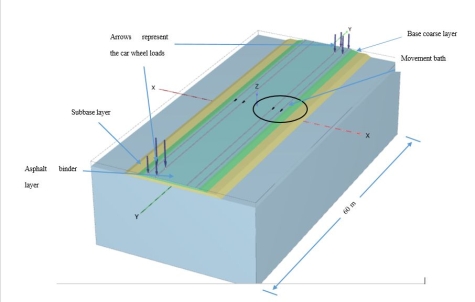
Fig. 1. 3D finite element model configuration
2.1 Vehicle modelling and dynamic load distribution
Two moving passenger cars were added to the 60 -meter numerical pavement model for general traffic considerations. The above described dynamic meeting and passing scenario within the pavement boundaries is created with an opposing traffic situation, where one vehicle moves in the forward direction while the other moves in the opposite direction as illustrated in Figure (1). A parametric speed analysis was carried out to study the influence of vehicle velocity on the dynamic response of the pavement. Different constant velocities of 25, 50, 100, 150, 200, and 250 km/hr were used as initial input conditions for the simulations. It will enable the time-dependent viscoelastic behavior of both conventional and polymer-modified asphalt mixtures to be studied over the whole range of vehicle velocities, from low urban speeds to very high speeds. This wide range of speeds provides a good evaluation of how the duration of loading influences the accumulation of shear stress and the depth of permanent deformation in the multi-vehicle passing model.
2.2 Evaluation point of the vertical settlement
The vertical displacement (settlement) at the absolute center of the 60-meter numerical model was measured systematically for comparison of the structural responses between conventional and polymer-modified asphalt models. Precisely at the passing zone where two vehicles collide to create maximum overlapping dynamic stress, this monitoring location is very critical. The extraction point for obtaining dynamic vertical settlement data was defined at coordinates (X = 30, Y = 12, Z = 0.9) in the global coordinate system. The total vertical displacement accumulated in the Z-axis direction (Uz) was recorded continuously over all simulated speed profiles. A graphical presentation of the resultant settlement curves and comparative datasets for both types of asphalt is shown in Figure (2).

Fig. 2. Dynamic time- settlement relationship
2.3 Comparative study between the conventional and polymer modified asphalt
A parametric study on the relationship between vehicle speed and maximum vertical settlement was performed to evaluate the structural performance of the two pavement models under different operating conditions. Maximum settlement values were extracted from a global coordinate point of (X=30, Y=12, Z=0.9) for all simulated velocities, which included 25, 50, 100, 150, 200, and 250 km/h. The numerical results for both conventional and polymer-modified asphalt (PMA) mixtures show a very clear and consistent trend — maximum vertical settlement decreases sharply as vehicle velocity increases. This is essentially an effect controlled by the viscoelastic and time-dependent nature of the asphalt binders. At lower speeds, such as 25 km/h, there is much time available for significant build-up of viscous flow and permanent plastic strain since the duration of action of the dynamic load on the pavement matrix is relatively long. Conversely, the dynamic pulse duration is very short at high speeds (up to 250 km/h), which limits the development of permanent deformations and makes the pavement layer react more rigidly. The maximum settlement versus speed relationship for conventional and polymer modified asphalt is shown in Figure (3)..
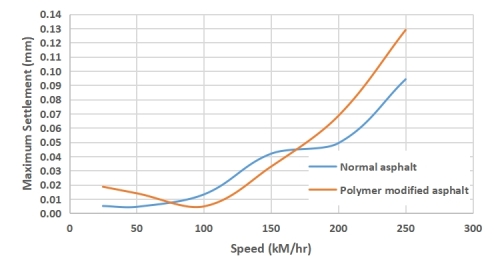
Fig. 3. The relationship between the speed and maximum settlement
3. Results and discussion
At 25 km/h, the total duration of the dynamic load pulse is much longer than that which is obtained at 250 km/h. This results in wider deformation curves and thus increased peak settlement, as the loading time on the pavement matrix is not limited.
Conventional asphalt binders are subject to considerable viscous flow at low speeds of 25 and 50 km/h because of the relatively long loading dwell time, which results in deeper vertical deformation troughs of approximately -0.15 mm for normal asphalt.
There is a distinct mechanical rebound phenomenon at very high speeds, 200 and 250 km/h. The settlement curves bounce into the positive displacement zone. This indicates structural elastic rebound or spring-back effect of the pavement layers due to high kinetic energy and quick removal of the load.
At very high speeds (150, 200, and 250 km/h), post-peak cyclical oscillations can be seen quite clearly. These fluctuations depict the manner in which strong dynamic stress waves travel through the road structure at the exact moment when the two opposing cars pass each other.
The Polymer Modified Asphalt (PMA) reduces the maximum settlement depth continuously over the whole speed range as compared to the conventional asphalt. It, therefore, reduces long-term plastic strains at the critical vehicle passing zone by increasing the stiffness and shear modulus of the wearing course. This can be achieved with a cross-linked polymer network.
In the late-stage recovery phase, the PMA model shows improved stabilization and dissipation of energy. The modified asphalt quickly dampens these dynamic shockwaves, forcing the pavement system back to structural equilibrium much more rapidly than the normal asphalt, which experiences unpredictable, uncontrollable residual oscillations at extremely high speeds.
The sudden upward swing of the maximum settlement curve above the 100 km/h threshold is, therefore, due to the superior elastic storage modulus of the Polymer Modified Asphalt (PMA) and not structural rutting as is the case with conventional asphalt. Because ordinary asphalt does not have this property of elasticity, it absorbs the dynamic energy by suffering from permanent viscous distress. The cross-linked polymer network will be taken to act as a highly resilient spring under the violent dynamic impact and overlapping stress waves of ultra high-speed vehicles; it sets up a massive elastic rebound wave.
Recommendation for future work
- Include thermal-mechanical analysis to see how temperature variations affect high-speed pavement elasticity.
- To better capture long-term permanent deformations, apply viscoplastic constitutive laws.
- Add heavy trucks and multi-axle configurations to the simulations.
- To verify the high-speed elastic rebound phenomenon, use field testing or embedded strain gauges.
References:
- Bitumen, S. (2003). The Shell bitumen handbook. Telford.
- El Koufachy, N., Seyedi, M., & Saedi, S. (2025). 3D modelling of pavement deflections considering the variations in temperatures, moving vehicle speeds, and axle loads. J. Civ. Hydraul. Eng, 3(4), 181–187.
- Hossain, M., Shakil, S., Barua, H., & Shoeb, K. (2024). Pavement service life prediction with PLAXIS 3D in Bangladesh. American journal of civil engineering, 12, 86–94.
- Liao, H., Yang, X., Yan, J., Du, X., & Lin, H. (2025). Laboratory Evaluation of Asphalt Binder and Asphalt Mixture Modified Using Styrene–Butadiene–Styrene/Rock Asphalt. Processes, 13(2), 292.
- Riaz, A., Yasir, N., Badin, G., & Mahmood, Y. (2024). Innovative pavement solutions: a comprehensive review from conventional asphalt to sustainable colored alternatives. Infrastructures, 9(10), 186.
- Sulyman, M., Sienkiewicz, M., & Haponiuk, J. (2014). Asphalt pavement material improvement: A review. International journal of environmental science and development, 5(5), 444.
- Zeiada, W. A., Underwood, B. S., Pourshams, T., Stempihar, J., & Kaloush, K. E. (2014). Comparison of conventional, polymer, and rubber asphalt mixtures using viscoelastic continuum damage model. Road Materials and Pavement Design, 15(3), 588–605.
- Zhang, C., Wang, H., You, Z., Gao, J., & Irfan, M. (2019). Performance test on Styrene-Butadiene-Styrene (SBS) modified asphalt based on the different evaluation methods. Applied Sciences, 9(3), 467.