Introduction
In the context of the rapid expansion of international professional contacts, foreign language proficiency has ceased to be limited to knowledge of grammar and memorization of terminological units. Professional communication in a globalized environment requires specialists to be able to interpret the meanings of lexical units, taking into account cultural realities, pragmatic norms and institutional expectations of a particular professional community. As a result, scientific discourse is increasingly focusing on how teachers can develop students' skills in working with professionally oriented vocabulary, based on intercultural strategies that take into account the interrelationship of language, culture and professional practices.
The transformation of views on lexical learning is largely related to the development of concepts of intercultural communicative competence. The classic works of M. Byram have shown that the development of students' ability to interact with representatives of other cultures includes not only language literacy, but also the ability to interpret value attitudes, communicative scenarios and social norms of a foreign-speaking community [1]. Later studies of D. Deardorff proposed a model of step-by-step formation of intercultural skills, which emphasizes the need to integrate cognitive, behavioral, and affective components into the learning process [2]. In relation to professional vocabulary, these approaches allow us to consider terms as signs reflecting the cultural and institutional views of the industry, which requires the teacher to move from a semantic and structural explanation to the analysis of culturally determined meanings.
A significant contribution to the rethinking of teaching methods was made by the theory of culturally responsive teaching, presented in the works of G. Gay and consistently developed in the research of G. Ladson-Billings [3], [4]. These authors emphasize that the educational process becomes more effective when the content of learning is correlated with the cultural experience of students. When applied to professional terminology, this means the need to select materials that reflect the variety of professional situations in which students may find themselves, as well as take into account their cultural beliefs about the work environment, communication, and professional roles. In the context of higher education, this approach ensures the creation of an inclusive educational environment where the interpretation of terms is perceived not as rote memorization, but as a process of correlating professional concepts with real social and cultural practices.
Along with this, in recent years, considerable attention has been paid to the theory of translinguality developed by O. García and Li Wei [4], [5]. According to their work, multilingualism should be considered not as a set of autonomous language systems, but as a single repertoire of resources that the student actively uses in the process of understanding and creating meaning. The use of translingual strategies in the study of professionally oriented vocabulary contributes to the formation of a more flexible conceptual framework, as students compare terminological units of different languages, identify conceptual discrepancies and associate meanings with cultural models anchored in various professional communities.
In parallel with the development of translingual approaches, the research tradition associated with task-based language teaching remains relevant. Works of R. Ellis, P. Skehan, and T. Pica show that the use of tasks imitating real professional situations contributes to the formation of stable vocabulary through the need to apply terms in conditions requiring interpretation of communicative norms and expectations of partners [6], [7], [8]. In the intercultural dimension, such tasks make it possible to model situations of interaction between representatives of different countries and professional cultures, thereby strengthening the ability of students to correctly use vocabulary in dynamic conditions of professional dialogue.
A significant part of modern research focuses on the discursive aspects of mastering a professional language. The works of J. Swales, K. Hyland demonstrate that professional vocabulary does not function in isolation, but as an element of genre structures in which social roles, institutional goals and models of argumentation are fixed [9], [10]. This implies the need to teach students the interpretation of terms in connection with the genre features of professional texts — reports, instructions, analytical reviews, scientific publications, minutes of meetings, etc. Such a discursively oriented approach helps to understand how lexical units ensure the fulfillment of communicative tasks within a specific professional genre.
Researchers are also interested in the Triadic Linguocultural Comparison Strategy (TLCCS), which is based on comparing units of three languages and three cultures. This approach allows students to identify differences in the structuring of professional concepts in different linguistic worldviews, as well as to understand how these differences affect decision-making, responsibility allocation, and ways of argumentation in the professional field. The application of the TLCCS strategy proves to be especially important in multilingual regions, where students are fluent in several languages and are able to identify conceptual discrepancies at a high level of abstraction.
Despite the availability of a large number of international studies, the problem of introducing intercultural strategies into professional vocabulary training remains insufficiently studied in a number of regions, including the post-Soviet space. In Kazakhstan, where the educational system is actively developing in the context of trilingualism, the issues of the formation of professional lexical competence are of particular importance. Existing research in the field of intercultural communication and professional English teaching indicates the need to adapt global methodological approaches to local educational traditions. However, data on how teachers actually integrate intercultural strategies into their practice remains extremely limited.
In the context of the growing demand for specialists who are able to effectively interact in an international professional environment, there is a need for a comprehensive study of how university teachers interpret intercultural approaches and apply them in the process of teaching professional vocabulary. The study of pedagogical decisions, preferences, and difficulties encountered in integrating these strategies will help determine which methods are most effective in multilingual audiences, as well as identify factors that hinder their full implementation.
The present study aims to fill this gap by analyzing the practices of experienced teachers working in multilingual education. It allows us to identify the degree of meaningful use of ICC, CRT, translingual approaches, TBLT, discursively oriented learning and TLCCS strategies in the formation of professionally oriented lexical competence. The results of the research provide the basis for the development of a holistic, culturally adapted learning model capable of integrating linguistic, professional and intercultural components into a single pedagogical system.
Bridging this gap requires an empirical study of the pedagogical concepts and practices of experienced teachers working with professionally oriented vocabulary in a multicultural audience. Understanding which approaches they consider the most effective, which strategies they apply systematically, and what difficulties they face in integrating intercultural elements will allow them to create a scientifically based, contextually adapted learning model.
In accordance with these tasks, the following research questions are formulated:
– Which groups of intercultural strategies do teachers consider the most effective for teaching professionally oriented vocabulary?
– How are these strategies implemented in educational practice and what pedagogical functions do they perform?
– What difficulties do teachers face when introducing intercultural approaches to teaching professional vocabulary?
– How can teachers' perceptions and practices contribute to the development of an improved professional vocabulary teaching model, taking into account linguistic, cultural and professional factors?
Based on the questions posed, the working hypotheses of the study are formulated. Teachers consider intercultural strategies as a significant tool for improving the effectiveness of teaching professional vocabulary in a multicultural audience. The degree and nature of the application of intercultural strategies varies depending on pedagogical experience, the institutional environment and the discipline of teaching. The systemic integration of intercultural strategies contributes to the development of students not only terminological competence, but also the ability for professional intercultural interaction. The results of the study will make it possible to substantiate the need to create an adaptive, culturally oriented model of teaching professional vocabulary, combining linguistic, intercultural and professional components.
Taken together, these provisions determine the theoretical and practical significance of research aimed at rethinking the teaching of professionally oriented vocabulary as an intercultural mediated process that requires an integrated methodological approach and consideration of local educational conditions.
Literature Review
The development of professionally oriented lexical competence in the context of multilingual education is considered by modern linguodidactics as a complex process requiring consideration of cultural, pragmatic, socio-institutional and discursive factors. In contrast to traditional lexical approaches focused on the mechanical acquisition of terminological units, recent research highlights the need for students to develop the ability to interpret the meaning of professional concepts in real-world communicative situations. In this regard, the literature review reveals the theoretical foundations and methodological solutions that define modern models of teaching professional vocabulary through the prism of intercultural, translingual, discursive and activity strategies.
Intercultural Communicative Competence (ICC) as a methodological basis
The concept of intercultural communicative competence, developed in the works of M. Byram, occupies a central place in research on the links between language, culture and professional interaction. Although the general role of this theory is noted in the introduction, a deeper analysis shows that the ICC significantly expands the understanding of the nature of professional vocabulary, complementing linguistic categories with social, cognitive and axiological components. In later works, Byram emphasizes the need for students to develop critical cultural awareness, which involves the ability to compare professional norms from different countries and identify their linguistic and cultural foundations.
In the research of the last decade, the ICC is considered not as a static set of skills, but as a dynamic structure embedded in the hierarchy of professional competencies. Thus, a number of authors note that intercultural competence in the field of professional communication involves the development of not only terms, but also conceptual categories — expectations, behaviors, methods of argumentation accepted in a particular professional community. This allows us to consider professional vocabulary as a component of professional identity formed during training.
Continuing the development of this theory, D. Deardorff in the ICC model emphasizes the need for a combination of internal attitudes, skills of interpretation and analysis, and the ability to transfer knowledge into real communication contexts. The literature highlights the special role of affective components that influence the success of mastering professional concepts. This is due to the fact that the interpretation of terms becomes more accurate when students feel included in various professional scenarios and are able to perceive the cultural specifics of the professional environment as a value.
Culturally Responsive Teaching (CRT) and professional vocabulary development
Works of G. Gay and G. Ladson-Billings create the foundation for understanding how the cultural experience of students influences the assimilation of professional terms. In more recent studies, CRT is seen as a way to form a meaningful connection between educational content and culturally determined ways of perceiving information. This is particularly important in vocational education, as students interpret professional concepts through the prism of their own cultural concepts of work role, responsibility, power, and communication.
Current research shows that the use of CRT in teaching professional vocabulary contributes to the development of students' ability to relate terms to real social practices. For example, in engineering, medical, and business disciplines, professional terms may reflect different cultural models of decision-making, responsibility allocation, and professional ethics. Therefore, CRT aims not only to teach the meanings of terms, but also to develop students' ability to interpret them in the context of culturally determined scenarios of professional behavior.
Modern CRT research also highlights the importance of adaptability of educational content. When working with professional vocabulary, the teacher should select materials containing situations from different cultural contexts: international projects, intercultural negotiations, cooperation of specialists from different countries. This not only expands the vocabulary of students, but also forms their understanding of how terms «live» in real work practices.
Translingualism and interpretation of professional meanings
The development of the translingual approach in applied linguistics has become one of the most notable methodological shifts of recent decades. The works of O. García, Li Wei, J. Cenoz, D. Gorter and S. Canagarajah demonstrate that translingualism is considered not as an alternation of languages, but as an integrative cognitive-discursive activity in which the learner uses his entire linguistic repertoire to solve professional, educational and communicative tasks. This means that knowledge of professional vocabulary in the context of multilingualism is formed not according to the «one word — one meaning — one language» model, but through the construction of multilevel semantic networks connecting the term with previously formed conceptual structures.
A number of studies (Canagarajah, 2013; Creese & Blackledge, 2015; Cenoz & Gorter, 2021) emphasize that translingual practices allow students to activate hidden cognitive memory resources. For example, when studying professional terms, students often intuitively correlate English terms with Russian and Kazakh equivalents, use morphological analogues, semantic associations, or professional situations that they encountered in their native language environment. These processes create the foundation for a more stable, deep, and contextually rich understanding of terminology. The translingual approach acquires particular importance when studying vocabulary related to professional values and management concepts. Thus, the leadership category in the English-speaking tradition is often associated with the ideas of individual initiative, personal responsibility, and horizontal distribution of authority. In the Russian-speaking professional environment, the term leadership is often associated with administrative hierarchy, formal status, and managerial directorship. In the Kazakh tradition, the term koshbashylyk includes not only a managerial function, but also cultural components — respect for seniority, teamwork of decisions, emphasis on the coherence of group actions.
In addition, translingual practices contribute to a deeper understanding of contextual and discursive patterns. For example, studies by Lo-Philip (2020) and He (2022) show that when analyzing authentic professional texts (contracts, instructions, reports, corporate codes), students who speak several languages are better able to identify terminological structures, identify hidden semantic connections, and distinguish between the intentions of the speaker or the author of the text. Translingual analysis helps them to see that formally equivalent terms may have different pragmatic functions, for example, they may differ in their level of formality, degree of categoricality, or degree of responsibility assigned to the subject of the action.
Additionally, translingual strategies contribute to the formation of professional flexibility. Research by Canagarajah (2017) shows that professionals trained in the translingual paradigm adapt more easily to international professional standards, integrate more quickly into English-speaking work processes, and demonstrate higher resilience to intercultural communication conflicts.
TBLT strategies for the development of professionally oriented vocabulary in an intercultural environment
In the field of task-based language teaching (TBLT), based on the work of R. Ellis (2003), P.Skehan (1998), and M. Long (2015) emphasize the effectiveness of using professionally oriented tasks that simulate the real conditions of the industry. According to Long, a learning task should reproduce real professional activities, including problem-based discussion, decision-making, argumentation, and collective decision-making. These actions inevitably involve the use of specialized vocabulary and discursive markers, which makes TBLT a powerful tool for integrating terminology into the natural communicative flow.
Research in the field of intercultural TBLT (Van den Branden, 2016; Thomas & Reinders, 2017) shows that tasks constructed on the basis of intercultural incidents significantly increase students' awareness of the cultural implications of professional terms. For example, discussing the mistakes of intercultural interaction in international companies helps students identify hidden meanings of terms related to ethics, hierarchy, negotiation, and corporate responsibility.
Discursive and Contrastive Strategies: Triadic Linguo-Cultural Comparison Strategy (TLCCS)
Approaches based on the comparison of discursive and cultural models have been significantly developed thanks to the works of A. Vezhbitskaya (2001), C. Kramsch (2009), J. House (2015), who emphasize that professional vocabulary is an element of broader semiotic systems reflecting cultural scenarios, argumentation norms, and ways of structuring professional knowledge.
Triadic Linguo-Cultural Comparison Strategy as a methodological tool was formed at the junction of several areas — contrastive pragmatics, anthropolinguistics and cognitive semantics. The foundations of such a three-way comparison are laid in the works of A. Wierzbicka (1997; 2001), S. Blum-Kulka (1994), C. Leech (2014) and modern studies by the Central Asian Contrastive Pragmatics Group (Aituganova, Nurbayeva, Suleimenova et al., 2018–2024). These authors demonstrate that using a three–point comparison (L1–L2-L3) makes it possible to identify hidden cultural parameters that cannot be detected by binary comparison.
In vocational education, TLCCS allows students to compare:
– differences in the terminological systems of the three languages;
– differences in the conceptualization of professional roles;
– cultural preferences in the structure of argumentation;
– features of decision etiquette and position matching strategies.
Research in the Eurasian region (Suleimenova, 2019; Smagulova, 2021) shows that students in Kazakhstan who speak several languages demonstrate an increased ability to identify conceptual discrepancies between English, Russian and Kazakh professional terms, which makes TLCCS one of the most promising tools for forming a deep professional and discursive understanding.
Research Methodology
The present study adopts a quantitative research design in order to examine teachers’ perceptions and pedagogical practices related to the use of intercultural strategies in teaching professionally-oriented English vocabulary. A quantitative approach was selected as it allows for the systematic identification of general trends and patterns in instructional practices and facilitates objective analysis of teachers’ evaluations.
Data were collected through a structured online questionnaire administered via Google Forms. The instrument consisted of 15 closed-ended and multiple-response questions , designed to gather information on teachers’ professional background, the frequency and range of intercultural strategies employed, their perceived effectiveness in developing students’ terminological and communicative competence, as well as the challenges associated with implementation. The questionnaire also addressed the issue of adapting international methodological frameworks to local higher education contexts.
The research sample included teachers engaged in teaching professionally-oriented English. Participants were selected based on their experience in professional English instruction, which ensured the relevance of the collected data to the research objectives. The sample encompassed teachers with varying levels of professional experience, enabling a balanced representation of perspectives.
The collected data were analyzed using descriptive statistical methods, primarily through frequency and percentage analysis. This approach made it possible to identify dominant tendencies in teachers’ responses and to interpret their pedagogical preferences and evaluations in a structured manner. Ethical considerations were strictly observed. Participation in the survey was voluntary, respondents were informed about the purpose of the study, and all data were collected anonymously and used exclusively for academic research purposes.
Results
The analysis of the survey data reveals several significant tendencies regarding the implementation of intercultural strategies in teaching professionally-oriented English vocabulary. The results are presented in accordance with the research objectives and reflect teachers’ professional background, perceptions of effectiveness, frequency of strategy use, and contextual considerations.
In terms of professional experience, the data indicate that the majority of respondents are experienced educators, with half of the participants reporting more than seven years of teaching professionally-oriented English. The presence of teachers with varying levels of experience contributes to the reliability of the findings, as it reflects both established and emerging pedagogical practices.
Teachers’ evaluations of the effectiveness of integrating multiple intercultural strategies demonstrate a predominantly positive orientation. Most respondents indicated that such integration significantly or moderately enhances the effectiveness of teaching professionally-oriented vocabulary. The absence of negative evaluations suggests a shared understanding among educators that intercultural strategies contribute meaningfully to professional language instruction.
The results further show that teachers employ a diverse range of intercultural strategies in their instructional practices. Intercultural Communicative Competence (ICC), Culturally Responsive Teaching (CRT), and Task-Based Language Teaching (TBLT) were identified as the most frequently used approaches. These strategies were valued for their ability to contextualize professional vocabulary within authentic communicative and cultural frameworks, thereby promoting meaningful learning.
Translingual and translanguaging strategies were also reported as part of teaching practice, particularly for comparing professional terminology across languages. Teachers noted that such approaches facilitate conceptual clarity and support deeper understanding of professional discourse. Discourse-oriented strategies, including the Triadic Linguo-Cultural Comparison Strategy (TLCCS), were applied more selectively, often depending on course objectives and time constraints.
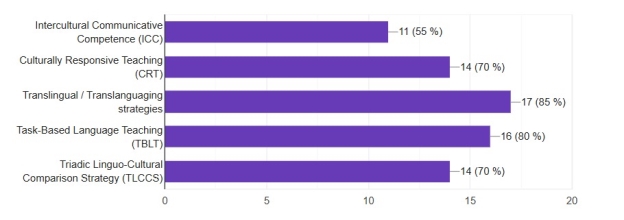
Fig. 1. Comparative use of translingual, translanguaging, and TLCCS strategies in teaching professionally-oriented vocabulary
Regarding learning outcomes, teachers identified intercultural strategies as particularly effective in developing students’ terminological competence. Approaches that integrate professional context, cultural awareness, and task-based interaction were perceived as most beneficial for vocabulary acquisition and retention. Similarly, respondents emphasized the role of intercultural strategies in enhancing students’ pragmatic and communicative competence, enabling learners to use professional vocabulary appropriately in intercultural professional settings.

Fig. 2. Effectiveness of intercultural strategies for learning outcomes
Despite the overall positive evaluation, the findings also reveal several challenges in implementing intercultural strategies. Teachers reported limitations related to instructional time, insufficient methodological training, and difficulties in aligning international pedagogical frameworks with local educational contexts. These constraints appear to affect the consistency and depth of strategy implementation rather than teachers’ willingness to adopt intercultural approaches.
Finally, respondents rated the overall effectiveness of intercultural strategies highly and emphasized the critical importance of adapting international methodologies to local higher education environments. This highlights the need for contextualized pedagogical models that balance global standards with local academic and cultural realities.
Conclusion
The findings of this study confirm that intercultural strategies play a significant role in enhancing the effectiveness of teaching professionally-oriented English vocabulary. The results demonstrate that teachers not only recognize the pedagogical value of intercultural approaches but also actively integrate them into their instructional practices.
The study shows that strategies such as Intercultural Communicative Competence (ICC), Culturally Responsive Teaching (CRT), and Task-Based Language Teaching (TBLT) are particularly effective in developing students’ terminological and communicative competence by situating professional vocabulary within meaningful cultural and professional contexts. At the same time, the reported challenges indicate that successful implementation requires adequate methodological support, sufficient preparation time, and thoughtful adaptation of international frameworks to local educational settings.
The theoretical contribution of this study lies in its integrative perspective, which conceptualizes professionally-oriented vocabulary acquisition as a multidimensional process combining linguistic, cultural, and pragmatic components within an intercultural pedagogical framework.
This perspective allows professionally-oriented vocabulary instruction to be viewed not merely as lexical training, but as a complex process of intercultural professional communication development.
Overall, the research underscores the importance of an integrated intercultural approach in professional English instruction. By aligning methodological innovation with contextual realities, educators can enhance students’ readiness for effective communication in global professional environments. The findings contribute to the growing body of research on intercultural pedagogy and provide practical implications for improving professionally-oriented language teaching in higher education.
References:
- Byram, M. Teaching and Assessing Intercultural Communicative Competence. Clevedon: Multilingual Matters, 1997. — 124 p.
- Deardorff, D. K. The SAGE Handbook of Intercultural Competence. Thousand Oaks: SAGE Publications, 2006. — 736 p.
- Gay, G. Culturally Responsive Teaching: Theory, Research, and Practice. New York: Teachers College Press, 2000. — 280 p.
- Ladson-Billings, G. The Dreamkeepers: Successful Teachers of African American Children. San Francisco: Jossey-Bass, 1995. — 278 p.
- Ladson-Billings, G. Culturally Relevant Pedagogy 2.0: Aka the Remix. Harvard Educational Review, 2014, Vol. 84(1), pp. 74–84.
- García, O., Li Wei. Translanguaging: Language, Bilingualism and Education. New York: Palgrave Macmillan, 2014. — 240 p.
- Creese, A., Blackledge, A. Translanguaging in the Bilingual Classroom: A Pedagogy for Learning and Teaching? Modern Language Journal, 2010, Vol. 94(1), pp. 103–115.
- Canagarajah, S. Translanguaging in the Classroom: Emerging Issues for Research and Pedagogy. Applied Linguistics Review, 2011, Vol. 2(1), pp. 1–28.
- Ellis, R. Task-Based Language Learning and Teaching. Oxford: Oxford University Press, 2003. — 432 p.
- Skehan, P. A Cognitive Approach to Language Learning. Oxford: Oxford University Press, 1998. — 256 p.
- Pica, T. Classroom Interaction, Task and L2 Learning. Applied Linguistics, 1994, Vol. 15(1), pp. 1–23.
- Swales, J. M. Genre Analysis: English in Academic and Research Settings. Cambridge: Cambridge University Press, 1990. — 285 p.
- Hyland, K. Academic Discourse: English in a Global Context. London: Continuum, 2005. — 248 p.
- Candlin, C.N., Gotti, M. (Eds.). Intercultural Discourse in the Professions. Bern: Peter Lang, 2014. — 312 p.
- Dovchin, S. Translingual Practices in Youth Digital Communication in Mongolia and Central Asia. International Journal of Bilingual Education and Bilingualism, 2020, Vol. 23(7), pp. 847–861.
- Cenoz, J., Gorter, D. Towards Multilingual Education: Basque Educational Research. Bristol: Multilingual Matters, 2021. — 320 p.
- Lo-Philip, W. Y. Translanguaging and Professional Discourse in Multilingual Contexts. Journal of Multilingual and Multicultural Development, 2020, Vol. 41(4), pp. 321–335.
- He, A. Multilingual Practices and Language Ideologies in Professional Settings. Applied Linguistics Review, 2022, Vol. 13(2), pp. 145–170.