Introduction and Theoretical Background
- The Challenge of Hard Rock Drilling
Drilling through hard rock formations represents one of the most significant technical and economic challenges in geotechnical engineering, mining, and energy exploration. Conventional rotary drilling methods, while effective in soft to medium formations, encounter substantial limitations when penetrating crystalline basement rocks, granites, basalts, and other high-compressive-strength materials.
— Excessive weight-on-bit (WOB) requirements: Hard rock necessitates increased downward force to achieve cutter penetration, leading to accelerated bit wear and mechanical dysfunction
— Thermal degradation: High frictional heat generation at the rock-bit interface causes premature failure of polycrystalline diamond compact (PDC)
— Cutters Low penetration rates: Conventional rotary methods achieve ROPs of less than 0.5 m/hr in ultra-hard formations, rendering projects economically unviable
— Equipment fatigue: Stick-slip vibrations, helical buckling, and torsional oscillations increase non-productive time and maintenance costs
- Evolution of Hybrid Drilling Concepts
The integration of rotary and percussive drilling mechanisms represents a paradigm shift in rock penetration technology. Hybrid systems leverage the complementary mechanisms of rock failure: rotary drilling induces shear failure through continuous cutter engagement, while percussive drilling generates compressive failure through high-frequency impact loading. The synergistic combination reduces the effective rock strength ahead of the bit, enabling more efficient material removal.
Historical development traces from early top-hammer pneumatic drills through modern down-the-hole (DTH) hammers to sophisticated mud-powered percussion enhancers. Contemporary hybrid systems include:
- Rotary-percussive DTH systems: Combining rotation with pneumatic or hydraulic hammer action at the bit
- Percussion-enhanced rotary drilling: Axial impulse generators positioned behind PDC bits Hydro-mechanical systems: Integrating high-pressure waterjets with percussive hammers
- Particle impact drilling: Steel shot injection to pre-fracture rock formations

Fig. 1. Rotary-percussive drilling rig configuration showing the integration of rotational and percussive mechanisms (Source: Energies Media)
2. System Classification and Working Mechanisms
2.1 Down-the-Hole (DTH) Hammer Systems
DTH drilling represents the most established hybrid technology, positioning the hammer mechanism immediately behind the drill bit at the bottom of the borehole. The operational sequence involves:
Energy transmission: Compressed air or water travels through the drill string to actuate a reciprocating piston
Impact generation: The piston strikes an anvil connected to the bit, delivering high-frequency blows (typically 1,000 2,000 blows per minute)
Rotation: Surface rotation (10 30 RPM) indexes the bit cutters to fresh rock between impacts
Cuttings removal: Exhaust fluid carries fragmented material up the annulus
DTH systems achieve nearly 100 % energy transfer efficiency compared to approximately 84 % for top-hammer configurations, as energy losses through drill string attenuation are eliminated. Modern water-powered DTH hammers demonstrate particular advantages in geothermal applications, operating effectively at depths exceeding 3,500 meters while maintaining borehole straightness and minimizing formation damage.

Fig. 2. Down-the-hole hammer assembly showing piston, bit, and flushing channels (Source: Made-in-China)
2.2 Percussion-Enhanced Rotary Systems
Novel percussion-enhanced systems, such as HydroVolve's HYPERDRIVE and GeoVolve technologies, represent a significant advancement in hybrid drilling. These systems utilize drilling mud hydraulics to power axial impulse generators positioned in the bottom-hole assembly (BHA) behind conventional PDC bits. Key characteristics include:
- Pre-fracturing mechanism: Cyclic axial impulses (20 30 Hz) pre-condition the rock, reducing unconfined compressive strength by 30 50 %
- Reduced WOB requirements : Pre-fracturing enables effective depth-of-cut at 40 60 % lower weight-on-bit
- Thermal management: Intermittent bit-rock contact reduces frictional heating, extending PDC cutter life by 200 300 %
- High-temperature tolerance: All-metal construction eliminates elastomeric seals, enabling operation at 300°C
Field trials demonstrate ROP improvements of 100 % compared to conventional rotary drilling, with bit life extension from 122 ft to 990 ft in granite formations
2.3 Hydro-Mechanical Hybrid Systems
The EU Horizon 2020 ORCHYD project developed an innovative hybrid combining high-pressure waterjet kerfing with percussive hammer action. The system operates through:
- Stress relief: High-pressure waterjets (600 L/min) groove the rock face, reducing confining stresses
- Fracture propagation: Unloading promotes micro-crack networks, weakening the rock matrix
- Percussive removal: A diamond-reinforced kerf-shaped bit impacts the pre-conditioned rock
- Energy conservation: Axial vibrations pressurize the waterjet, creating a self-sustaining energy loop
Laboratory testing achieved 80 % ROP increases over conventional methods, with target performance of 20 25 m/hr in hard rock
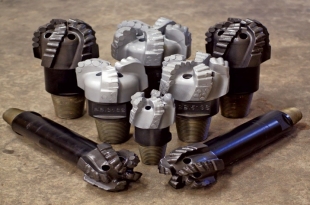
Fig. 3. Various PDC and hybrid drill bit configurations for hard rock applications (Source: Trenchless Technology)
3. Comparative Performance Analysis
3.1 Penetration Rate Optimization
Comparative field studies reveal significant performance differentials between drilling methodologies in hard rock formations:
Table 1
Comparative performance metrics for drilling technologies in hard rock formations (Compiled from)
|
Drilling Method |
Typical ROP (m/hr) |
UCS Range (MPa) |
Energy Efficiency |
Deviation Control |
|
Conventional Rotary |
0.3–0.8 |
<100 |
Moderate |
5–10 % |
|
Top-Hammer |
1.0–2.0 |
100–200 |
Good |
3–5 % |
|
DTH Hammer |
1.5–3.0 |
150–300 |
Excellent |
1–2 % |
|
Percussion-Enhanced |
2.0–4.0 |
200–400 |
Superior |
2–3 % |
|
Hydro-Mechanical |
4.0–10.0 |
150–250 |
High |
1–2 % |
3.2 Economic and Operational Advantages
Hybrid drilling systems deliver multifaceted benefits beyond penetration rate improvements:
Cost Reduction: Strada Global's fluid hammer system achieved 70 % cost reduction in Australian geothermal projects, drilling 6,000m depths at 20 m/hr in 200 MPa granite. The reduction stems from:
— Decreased bit consumption (3× life extension)
— Reduced tripping time (fewer bit changes)
— Lower fuel consumption (optimized energy transfer)
Operational Flexibility: Hybrid systems adapt to varying geological conditions without equipment changes. The Terelion Rotary Percussion System (RPS) operates effectively across soft soils to hard bedrock through adjustable percussive energy. Environmental Benefits: Water-powered systems eliminate dust generation and reduce noise emissions by 30 % compared to air-powered alternatives, enabling urban construction applications
3.3 Limitations and Constraints
Despite advantages, hybrid systems present specific limitations:
— Hydraulic complexity: Mud-powered hammers require precise pressure management to avoid equivalent circulating density (ECD) issues
— Directional control: Particle impact drilling currently lacks compatible measurement-while-drilling (MWD) telemetry due to erosion risks
— Depth limitations: Air-powered DTH systems experience efficiency degradation below 1,000m due to compressibility effects
— Initial capital cost: Hybrid BHA components command 40 60 % premium over conventional rotary assemblies
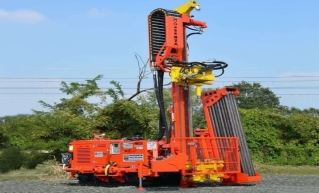
Fig. 4. Geothermal drilling rig deploying hybrid rotary-percussive technology (Source: Massena Drilling Rigs)
4. Engineering Design and Optimization Parameters
4.1 Drill Bit Design Considerations Hybrid drilling necessitates specialized bit configurations optimized for combined loading conditions:
Bit Face Geometry:
Concave profiles: Enhance deviation control and cuttings removal in homogeneous hard rock
Convex profiles: Maximize penetration rates in soft to medium formations Flat-face designs: Provide versatility across mixed geological conditions
Cutter Configuration:
Spherical inserts: Maximum impact resistance for percussion-dominated drilling
Semi-ballistic inserts: Balance between penetration rate and durability
Conical diamond elements (CDE): Schlumberger's hybrid design combining PDC cutters with conical precrushing elements achieves 4.0 8.0 m/hr in geothermal applications
Material Selection
Tungsten carbide with cobalt binder for impact resistance
Thermally stable polycrystalline (TSP) diamond for high-temperature environments
Diamond-impregnated matrices for extreme abrasion resistance
4.2 Operating Parameter Optimization
Effective hybrid drilling requires systematic parameter adjustment based on rock mass characteristics:
Weight-on-Bit (WOB):
— Hard rock: High thrust (20 40 kN) to ensure cutter penetration
— Soft formations: Reduced thrust (5 15 kN) to prevent bit balling
— Percussion-enhanced systems: 40 60 % lower WOB than conventional rotary
Rotation Speed:
— Hard abrasive rock: 20 40 RPM to minimize cutter heating
— Medium rock: 50 80 RPM for optimal cuttings evacuation
— Soft rock: 80 120 RPM for maximum penetration
Percussive Frequency:
— Standard DTH: 1,000 2,000 BPM (blows per minute)
— Enhanced rotary: 20 30 Hz (1,200 1,800 BPM)
— High-frequency systems: Up to 3,000 BPM for micro-fracturing
Flushing Media:
— Air: Standard for DTH, limited to <1,000m depth
— Water: Superior for deep drilling, dust suppression, and temperature control Foam: Extends depth capability by 30 % and improves cuttings transport

Fig. 5. Hard rock PDC diamond drill bit with reinforced cutters (Source: Made-in-China)
5. Applications in Specialized Environments
5.1 Geothermal Energy Development
Superhot rock (SHR) geothermal resources, characterized by temperatures exceeding 300°C and crystalline basement formations, represent the primary application domain for hybrid drilling. The GeoVolve HYPERDRIVE system has demonstrated:
— Sustained operation at 220°C in Hungarian field trials
— Penetration of 5,800m in Ukrainian sedimentary sequences at 2 m/hr average ROP
— Compatibility with conventional rotary infrastructure
The U. S. Department of Energy's FORGE project in Utah serves as a critical testbed for hybrid technologies, with particle impact drilling achieving 45 ft/hr in 45,000 50,000 psi granite.
5.2 Deep Foundation and Mining Applications
Hybrid systems excel in urban foundation drilling where noise and vibration restrictions apply:
— Micropile installation: DTH hammers achieve 1 2 % deviation tolerance in anchor holes up to 50m depth
— Blast hole drilling: Top-hammer systems deliver 30 % productivity improvements in quarrying operations
— Tunneling: Rotary-percussive methods reduce overbreak and improve profile accuracy in hard rock tunnel boring
5.3 Mineral Exploration
Reverse circulation (RC) drilling utilizing hybrid DTH systems provides high-quality samples with minimal contamination. The dual-wall pipe configuration enables rapid penetration (2 3 m/hr) in weathered bedrock while maintaining sample integrity

Fig. 6. DHD350 DTH bit designed specifically for hard rock drilling applications (Source: Leanoms Drill)
6. Conclusions and Recommendations
6.1 Summary of Findings
Hybrid drilling systems combining rotary and percussive mechanisms have demonstrated transformative potential for hard rock penetration:
- Performance Enhancement: ROP improvements of 100 300 % over conventional rotary drilling, with bit life extensions exceeding 200 % in field trials
- Economic Viability: Cost reductions of 50 70 % in deep geothermal projects through reduced tripping time and bit consumption
- Technical Versatility: Successful operation across diverse geological environments from soft sediments to ultra-hard crystalline basement
- Environmental Compatibility: Water-powered systems enable sustainable drilling with minimal dust, noise, and vibration
6.2 Strategic Recommendations
For academic researchers and industry practitioners:
Immediate Implementation:
— Adopt percussion-enhanced rotary systems for geothermal wells targeting crystalline basement
— Implement DTH hammer technology for foundation drilling in hard rock urban environments
— Optimize drilling parameters using real-time monitoring systems
Research Priorities:
— Develop high-temperature (>300°C) compatible hybrid systems for supercritical geothermal resources
— Investigate directional control mechanisms for particle impact drilling
— Validate plasma-assisted drilling through extended field trials
Technology Development:
Integrate artificial intelligence for autonomous parameter optimization
Advance materials science for cutter durability in abrasive formations Standardize hybrid system interfaces for interoperability across rig fleets
6.3 Future Outlook
The convergence of hybrid drilling technologies with renewable energy development, particularly deep geothermal and green hydrogen storage in rock caverns, positions these systems as critical infrastructure for the energy transition. Continued innovation in materials, automation, and energy efficiency will likely establish hybrid rotary-percussive drilling as the standard methodology for hard rock penetration within the next decade.
References:
- Kelly Way Group. (2026). Rotary Drilling vs. Percussive Drilling: Which Method is Best for Your Pile Project? Retrieved from https://www.kellywaygroup.com
- Terelion. (2024). Rotary Percussion System™ (RPS) Gen 2. Product Documentation.
- Moyes, P., Airnes, J., Anderson, M., Keshiyev, S., & Zbaraskiy, V. (2023). Percussion-Enhanced Drilling Technology Supercharges Drilling Performance. HydroVolve & Zerdalab Technical Paper.
- Sino Drills. (2025). What is Rock Drilling: The Ultimate Guide. Technical Resources.
- CA Drillers. (2024). Two Primary Drilling Techniques: Percussive Drilling and Rotary Drilling. Industry Guide.
- Morath GmbH. (2024). Rotary percussive drilling (down-the-hole hammer). Technical Documentation.
- Encyclopedia of Engineering. (2021). Rotary-Percussion Drilling. https://encyclopedia.pub/entry/10212
- Rooklin Enterprises. (2024). A Guide to Different Rock Drilling Techniques. Construction Resources.
- Drill Master Group. (2024). Rotary drilling versus percussive drilling techniques. Technical Comparison.
- Pile Buck Magazine. (2024). Mastering the Hard Rock: Effective Drilling Techniques and Technologies.
- NETL. (2024). Fundamental Research on Percussion Drilling. U. S. Department of Energy.
- O-K Bit. (2025). Mastering DTH Drilling: Tools, Tips, and Techniques. [13] Sino Drills. (2025). How Does a DTH Hammer Drill Work? Technical Guide.
- WonTech Drill. (2025). The Advantages of DTH Drilling in Hard Rock Formations.
- Kelleg Drill. (2025). How to Set Drilling Parameters for Down-the-Hole Hammers.
- Reld Drill. (2025). DTH Drilling: Complete Guide to Boost Your Productivity.
- Drill King. (2025). Choosing the right DTH Hammer for efficient Water Well Drilling.
- Terra Roc Drilling. (2023). Down the hole hammers: a guide for drillers and engineers.
- Cascade Institute. (2025). Drilling for Superhot Geothermal Energy: A Technology Gap Analysis.
- ScienceDirect. (2025). Advances in geothermal drilling: A comparative study with oil and gas techniques.
- Stanford University. (2025). Drilling for Superhot Geothermal Energy: A Technology Gap Assessment.